Olha ‘Ola’ Lytovchenko

Home
About
Contact
Research / Design
Gift Planner
Never miss a special moment—our smart gift scheduling app helps you plan, organize,
and personalize thoughtful gifts, so you're always ready to make someone feel truly loved
Project Overview
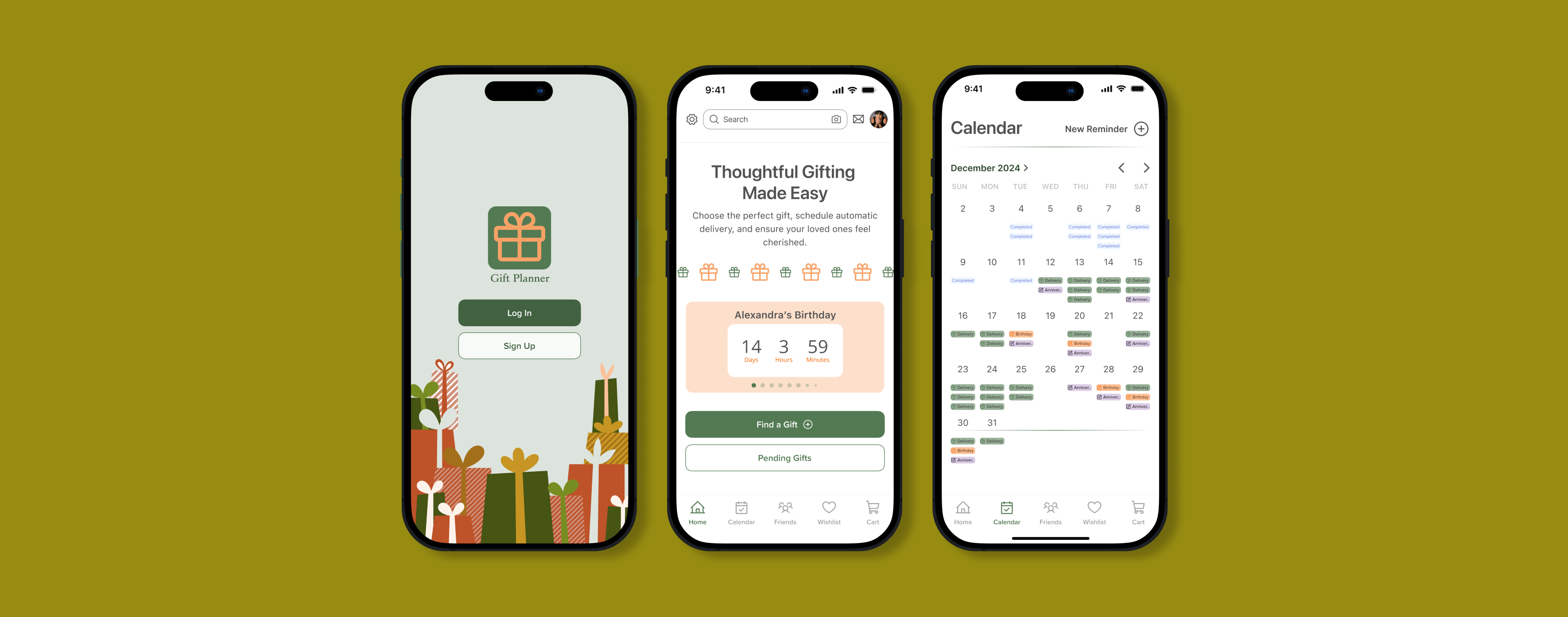
Gift Planner is a concept app designed to simplify the process of gift-giving by providing users with an intuitive scheduling system. The app allows users to plan, organize, and personalize gifts, offering features like reminders, curated gift recommendations, and wishlist management. Gift Planner ensures that no special occasion is missed by helping users track important dates and select thoughtful presents on time.
Framework
We followed the Double Diamond framework, starting with research to define user needs and pain points. In the later phases, we ideated, prototyped, and tested solutions to refine the design, ensuring an intuitive and personalized gift-planning experience.
Research
Extensive research was conducted, including user interviews, competitive analysis, and heuristic evaluations, to gather insights about user pain points, goals, and behaviors.
Synthesis
Insights were synthesized into clear problem statements, personas, and user journey maps to guide the design process and ensure alignment with user needs.
Design
Ideas were brainstormed and transformed into wireframes and prototypes, focusing on creating intuitive and accessible solutions to identified problems.
Delivery
The prototypes underwent usability testing in multiple rounds to gather feedback and refine the design, ensuring the final product was effective, seamless, and aligned with user expectations.
Scope of Work
- Gift Planner aims to simplify the gift-giving process by providing users with an intuitive scheduling and personalization system. However, challenges include ensuring ease of use, personalization, and seamless integration of gift suggestions and reminders.
- To address these challenges, the focus will be on improving usability, personalization, and trust, helping users plan and organize gifts effortlessly.
- This will be achieved by employing UX research methods, prototyping, and usability testing to enhance user experience and ensure a smooth, engaging process for every gift-giving occasion.
Problem Space
Users struggle to find thoughtful, personalized gifts for their loved ones while managing a busy life. They value including everyone and need a way to schedule gift delivery in advance to ensure each occasion is celebrated on time.
How might we help users discover thoughtful, personalized gifts effortlessly while staying on schedule and within their budget?
Discover & Define
Goal of Research
To understand users' needs, pain points, and behaviors, identify key challenges in the gifting process, and validate design solutions that simplify and personalize the experience, creating a user-centered platform that meets both user needs and business objectives.
- Screener Surveys
- Competitive Analysis(Features Inventory/Element Analysis)
- Comparator Analysis(SWOT Analysis)
- User Interviews + Synthesis
- Feature Prioritization
- MoSCoW Method
- Journey Mapping
- Usability Testing + Interviews
Methods
Competitive Analysis
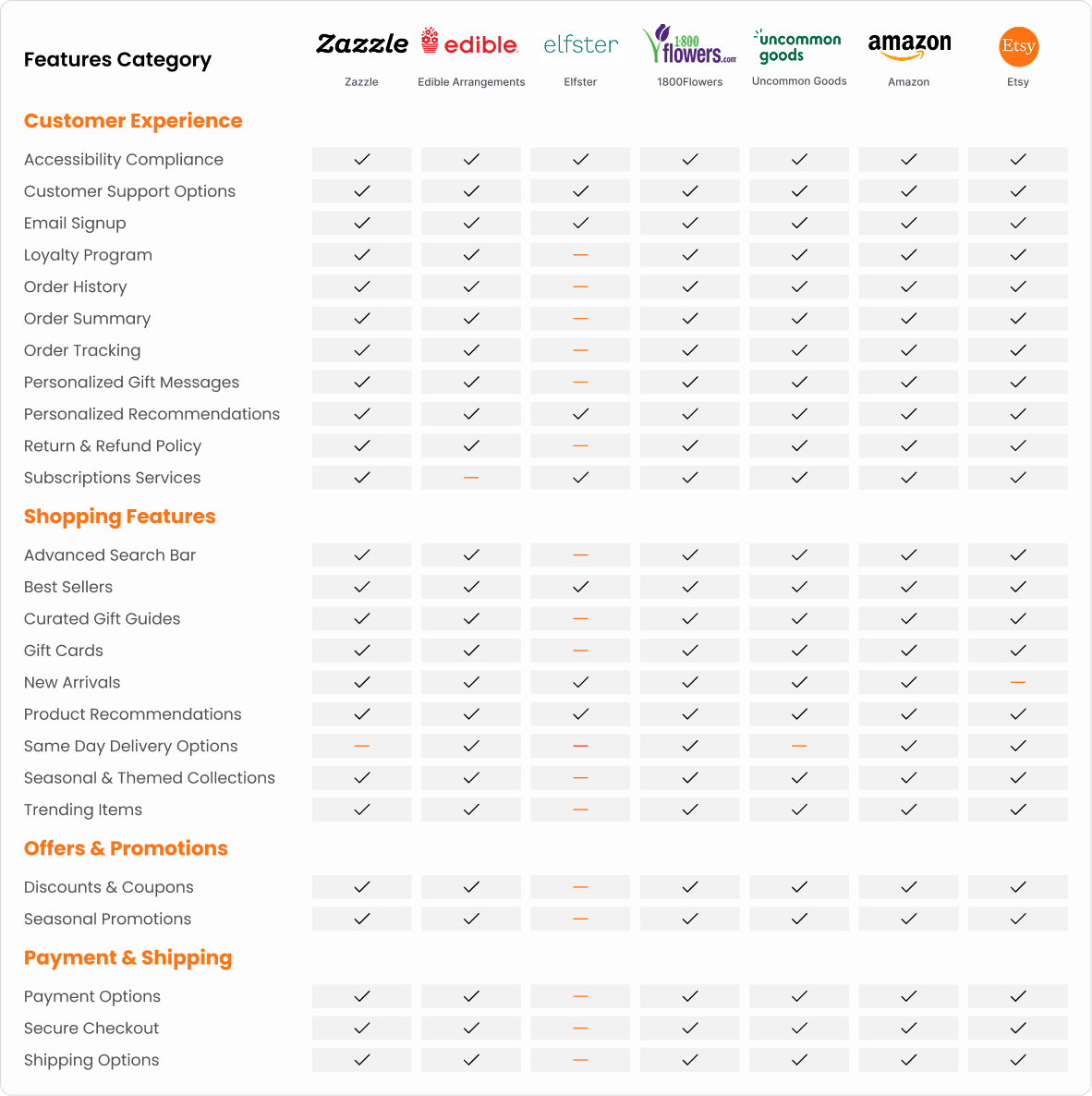
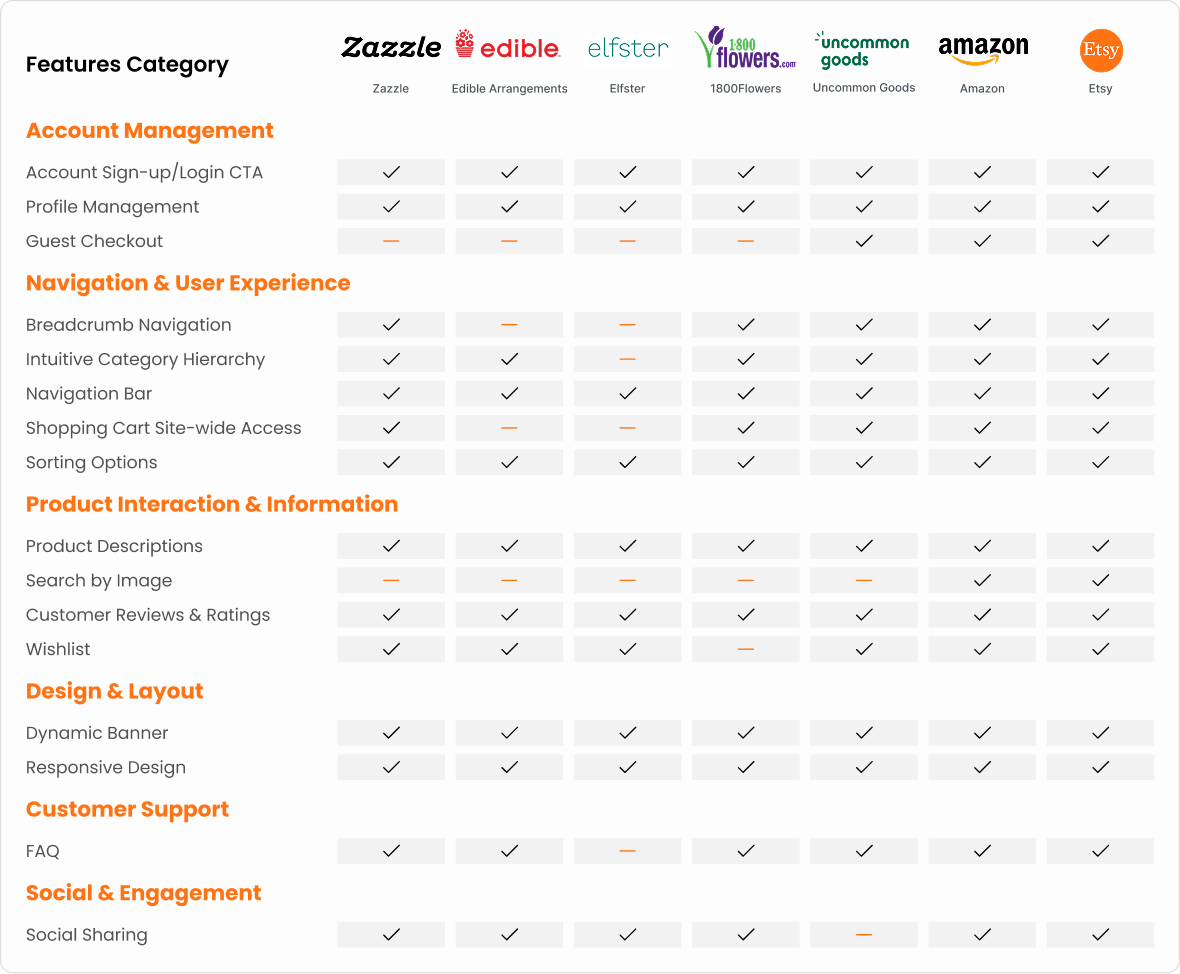
Wee conducted a Competitive Analysis, Feature Inventory, and Element Analysis, combining the findings to inform the MoSCoW Method and Feature Prioritization Matrix. This allowed us to identify key features, prioritize them based on user needs and business goals, and ensure the platform delivers the most valuable functionalities efficiently.
User Interviews
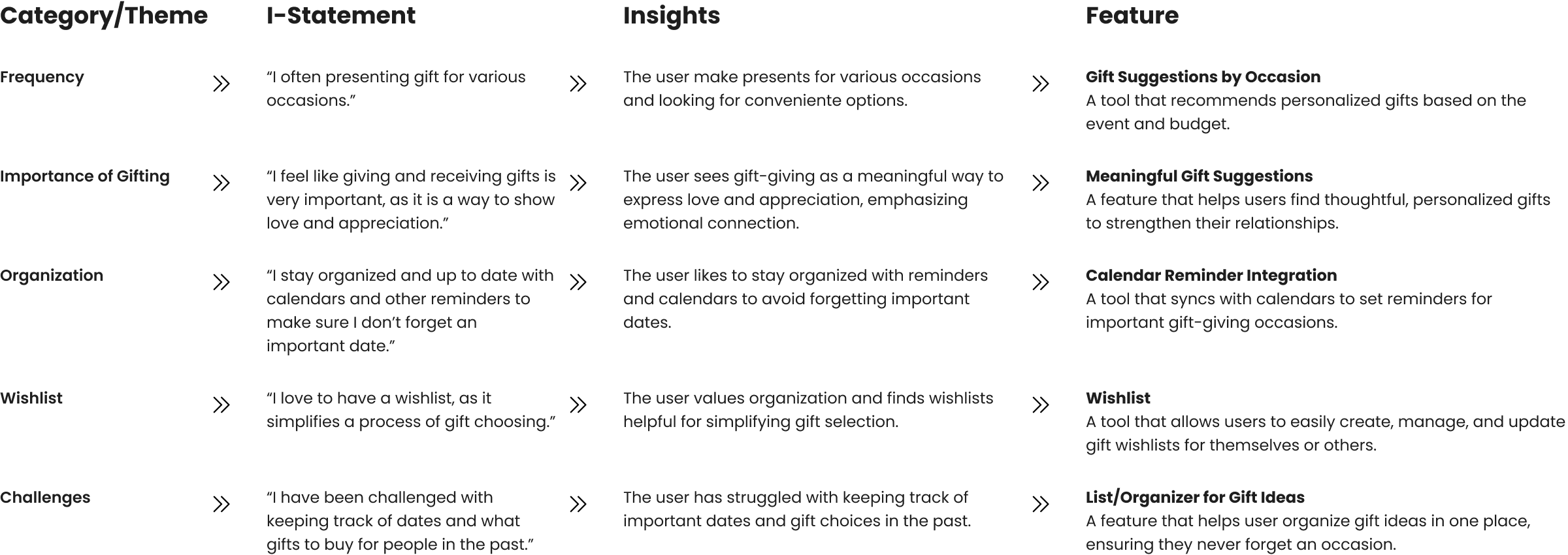
We interviewed five users to collect qualitative data on their needs, goals, and frustrations. Through affinity mapping, we organized their responses and crafted “I-Statements” to uncover key insights, which directly shaped the feature development.
Personas
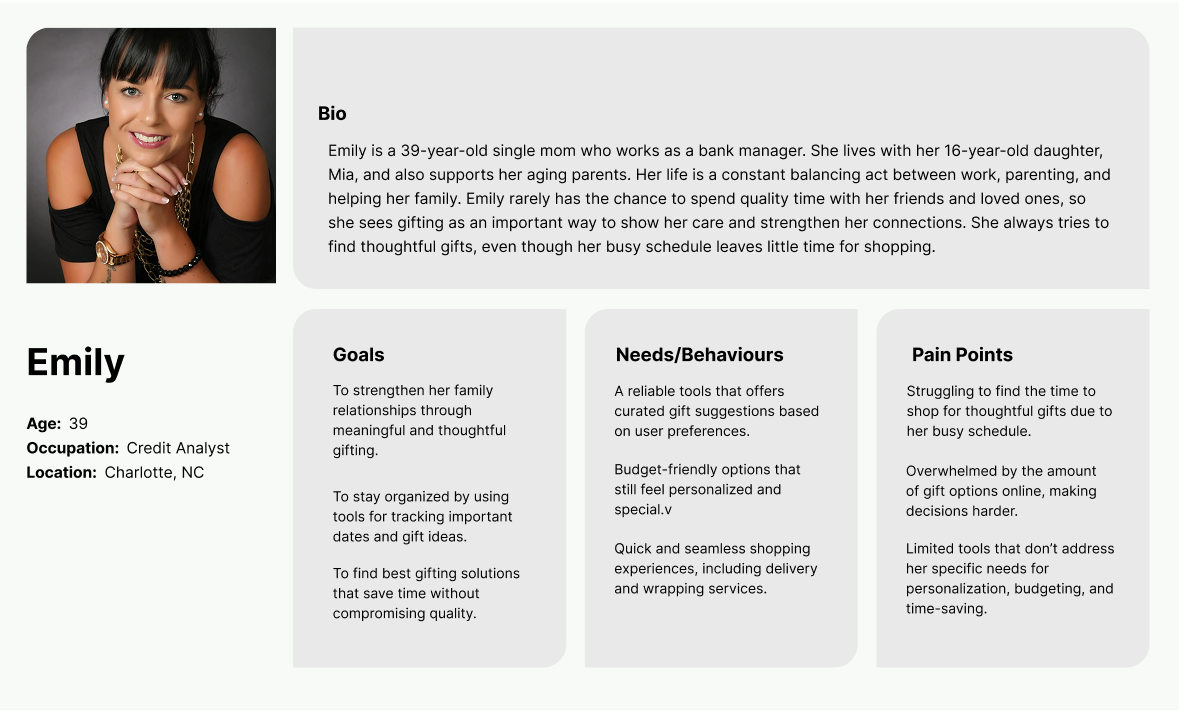
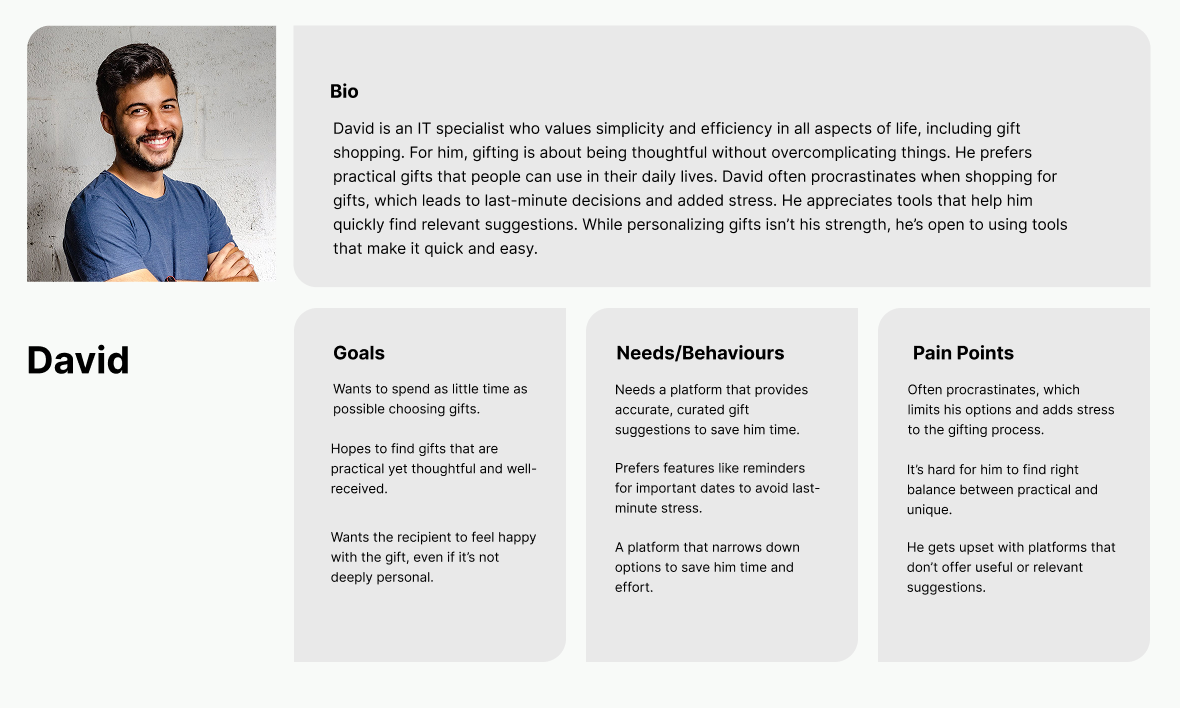
Based on insights from user interviews with eight participants, we developed both a primary and secondary persona. These personas capture key motivations, behaviors, goals, and frustrations of our target users, serving as a foundation for user-centered design solutions.
Journey Map
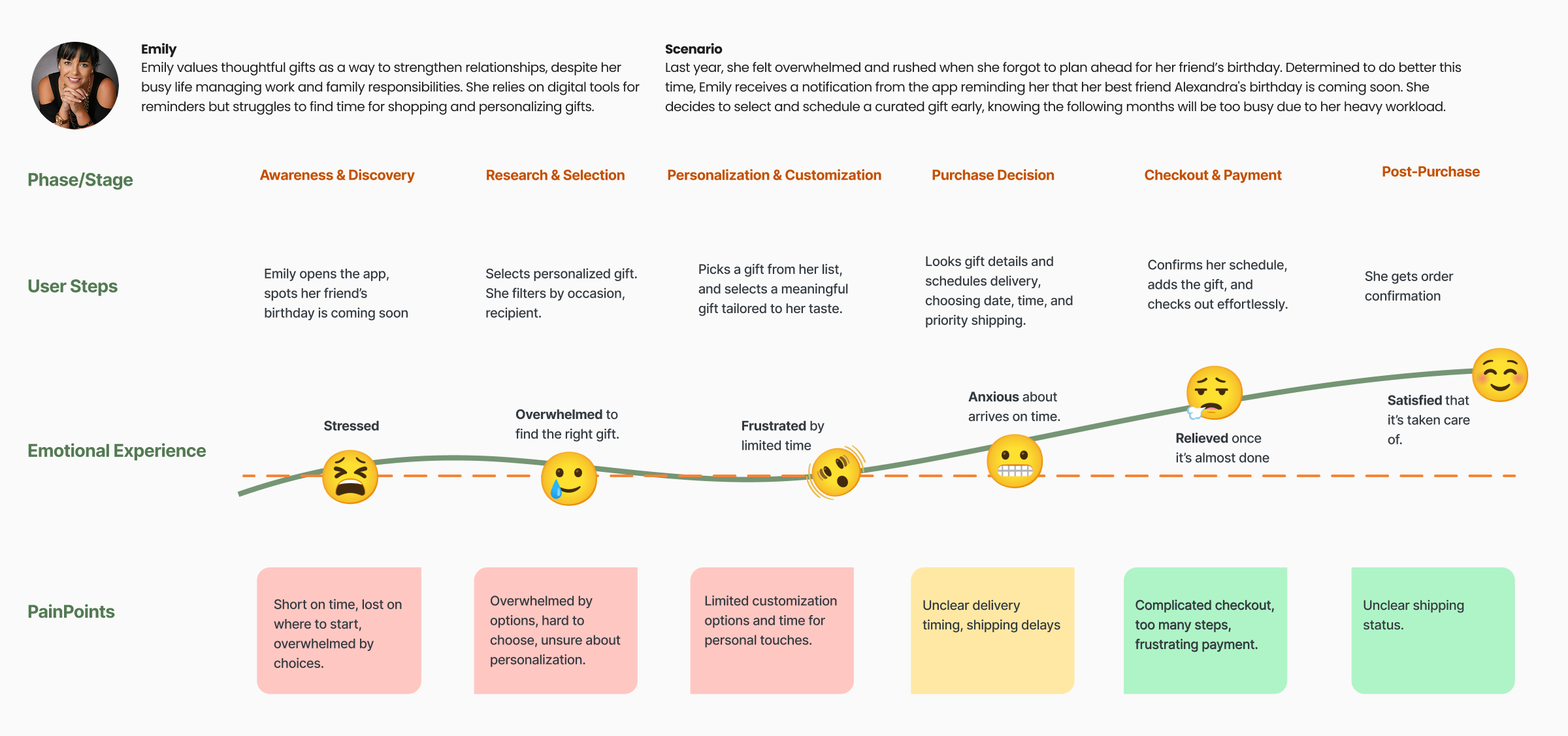
The user journey map outlines the primary persona’s experience, from realizing the need for a gift to the moment it’s received. It highlights key touchpoints, including discovery, selection, scheduling, and delivery, while addressing pain points like time constraints, decision fatigue, and organization challenges.
Refined Challenge Statement
Busy individuals struggle to find and schedule thoughtful, personalized gifts on time. They need a seamless solution that simplifies discovery, selection, and delivery while ensuring every special occasion is celebrated without stress.
Unique Value Proposition
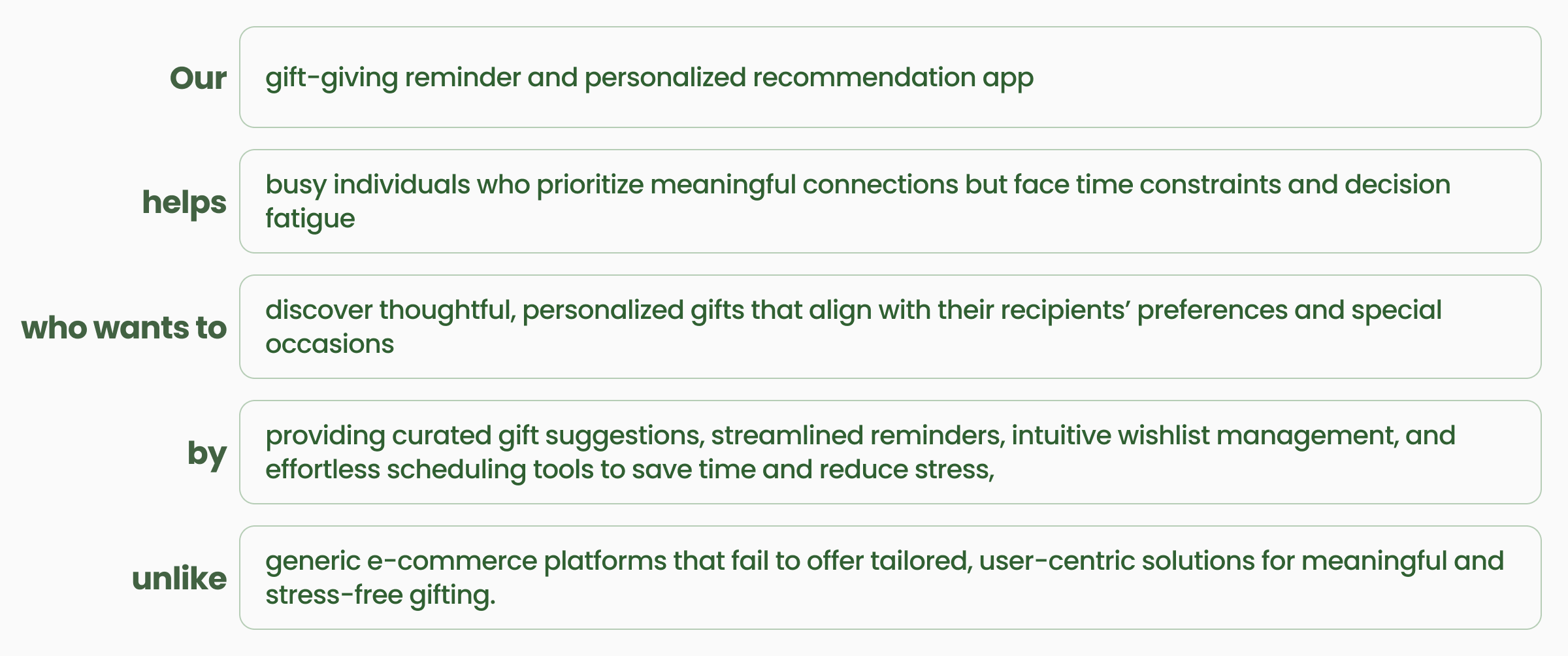
The user journey map outlines the primary persona’s experience, from realizing the need for a gift to the moment it’s received. It highlights key touchpoints, including discovery, selection, scheduling, and delivery, while addressing pain points like time constraints, decision fatigue, and organization challenges.
Research Takeaways
Research
Extensive research was conducted, including user interviews, competitive analysis, and heuristic evaluations, to gather insights about user pain points, goals, and behaviors.
Synthesis
Insights were synthesized into clear problem statements, personas, and user journey maps to guide the design process and ensure alignment with user needs.
Design
Ideas were brainstormed and transformed into wireframes and prototypes, focusing on creating intuitive and accessible solutions to identified problems.
Delivery
The prototypes underwent usability testing in multiple rounds to gather feedback and refine the design, ensuring the final product was effective, seamless, and aligned with user expectations.
Design & Deliver
Sketching + Concepting
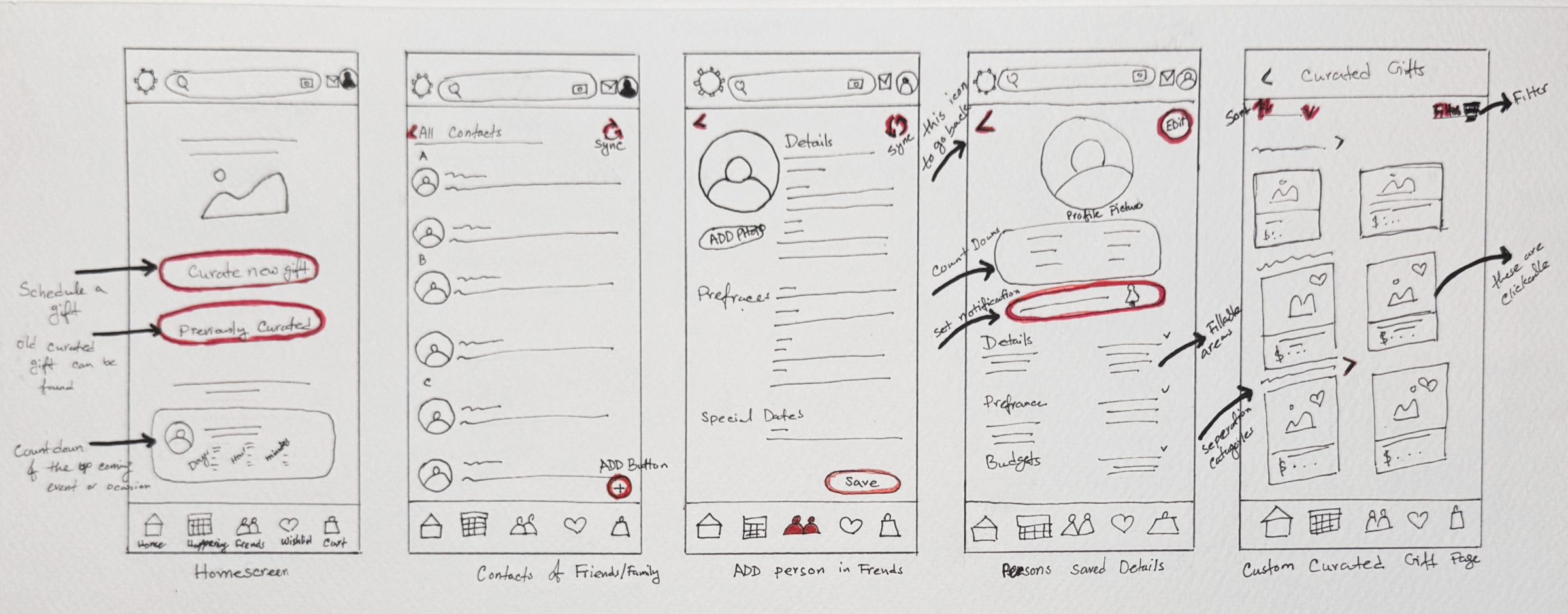
We began the design phase by conceptualizing solutions to address key user pain points, exploring various ideas, features, and layouts to craft an intuitive and user-friendly gift scheduling experience.
Mid-fidelity Screens
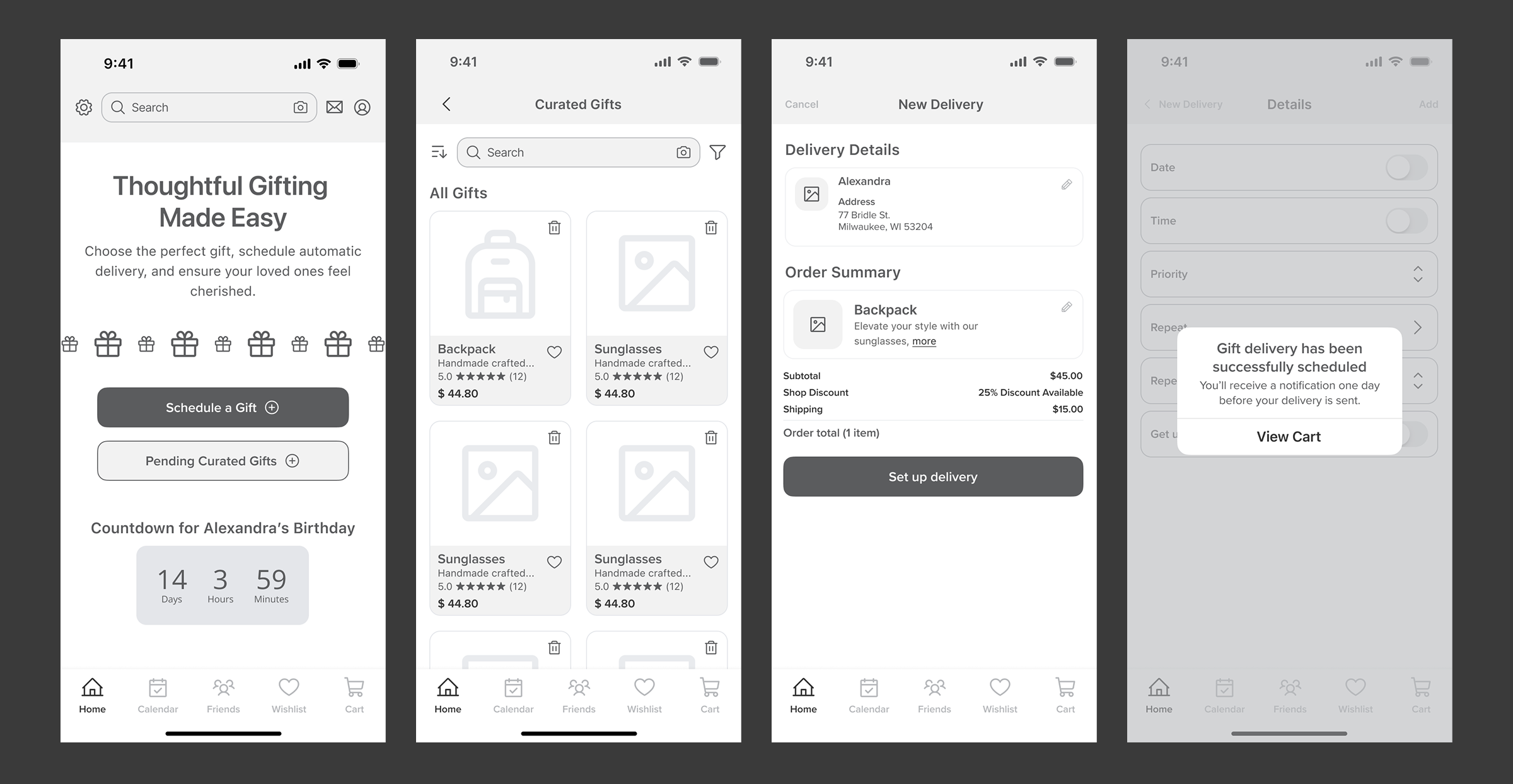
In this phase, we applied our finalized concepts to create the first set of wireframes, translating our ideas into tangible designs. This stage marked the transition from conceptualization to the initial visual representation, laying the foundation for a user-friendly and functional experience.
Hi-fidelity Screens
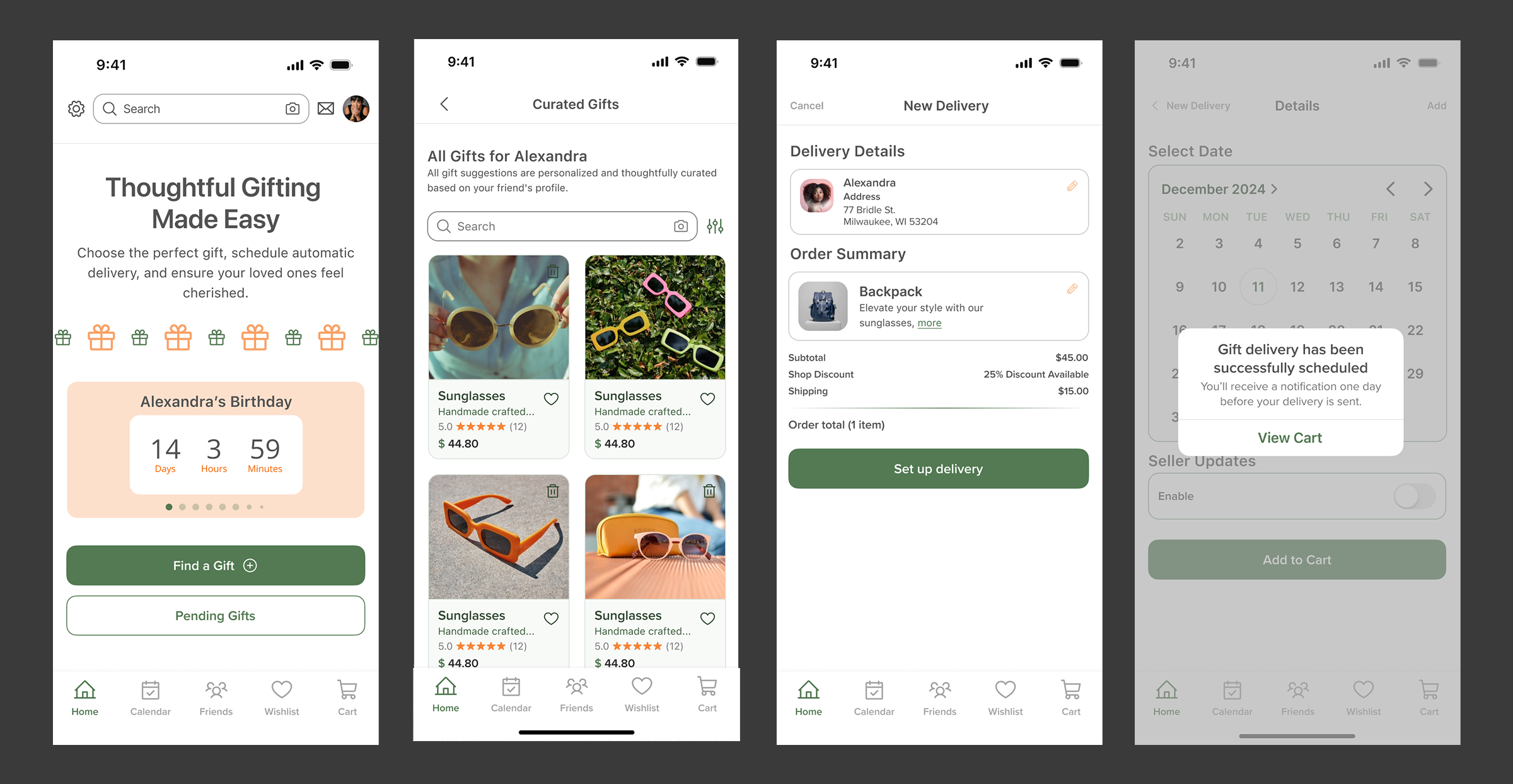
The high-fidelity phase refined the wireframes into polished, detailed designs, incorporating feedback to improve usability and visual appeal. Each iteration focused on optimizing user flow, enhancing clarity, and ensuring intuitive interactions for a seamless gifting experience.
Usability Testing
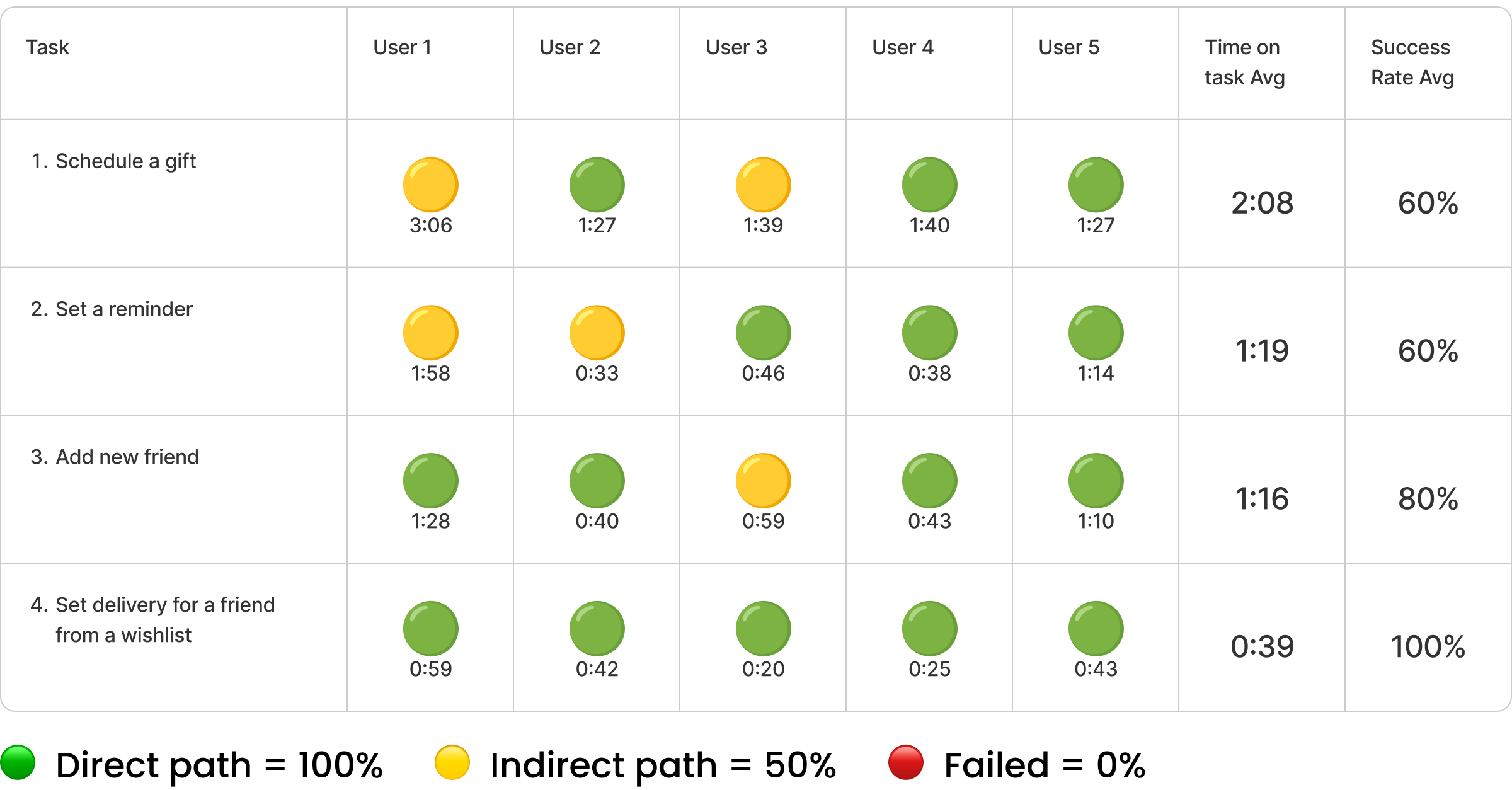
We conducted a usability testing session to identify key usability issues, uncover user pain points, and gather feedback on the overall flow and experience. The insights helped us make targeted improvements to enhance clarity, efficiency, and user satisfaction.
Prototype
After conducting two rounds of usability testing on the mid- and high-fidelity designs, we identified and addressed key issues. Based on user feedback, we refined the user flow, improved visual clarity, and enhanced interactions to ensure a seamless and intuitive gifting experience. The final prototype reflects these improvements, offering a polished and user-centered design.
Olha ‘Ola’ Lytovchenko
Home
About
Contact
Research / Design
Gift Planner
Never miss a special moment—our smart gift scheduling app helps you plan, organize,
and personalize thoughtful gifts, so you're always ready to make someone feel truly loved
Project Overview
Gift Planner is a concept app designed to simplify the process of gift-giving by providing users with an intuitive scheduling system. The app allows users to plan, organize, and personalize gifts, offering features like reminders, curated gift recommendations, and wishlist management. Gift Planner ensures that no special occasion is missed by helping users track important dates and select thoughtful presents on time.
Framework
We followed the Double Diamond framework, starting with research to define user needs and pain points. In the later phases, we ideated, prototyped, and tested solutions to refine the design, ensuring an intuitive and personalized gift-planning experience.
Discover
Conducted user research to understand pain points and gather insights on gift-giving challenges.
Define
Analyzed research findings to define key user needs and focus areas for the app.
Design
Ideated and created prototypes, testing them with users to refine features and interactions.
Deliver
Finalized the design based on user feedback, ensuring an intuitive and engaging experience.
Scope of Work
- Gift Planner aims to simplify the gift-giving process by providing users with an intuitive scheduling and personalization system. However, challenges include ensuring ease of use, personalization, and seamless integration of gift suggestions and reminders.
- To address these challenges, the focus will be on improving usability, personalization, and trust, helping users plan and organize gifts effortlessly.
- This will be achieved by employing UX research methods, prototyping, and usability testing to enhance user experience and ensure a smooth, engaging process for every gift-giving occasion.
Problem Space
Users struggle to find thoughtful, personalized gifts for their loved ones while managing a busy life. They value including everyone and need a way to schedule gift delivery in advance to ensure each occasion is celebrated on time.
How might we help users discover thoughtful, personalized gifts effortlessly while staying on schedule and within their budget?
Discover & Define
Goal of Research
To understand users' needs, pain points, and behaviors, identify key challenges in the gifting process, and validate design solutions that simplify and personalize the experience, creating a user-centered platform that meets both user needs and business objectives.
- Screener Surveys
- Competitive Analysis(Features Inventory/Element Analysis)
- Comparator Analysis(SWOT Analysis)
- User Interviews + Synthesis
- Feature Prioritization
- MoSCoW Method
- Journey Mapping
- Usability Testing + Interviews
Methods
Competitive Analysis
Wee conducted a Competitive Analysis, Feature Inventory, and Element Analysis, combining the findings to inform the MoSCoW Method and Feature Prioritization Matrix. This allowed us to identify key features, prioritize them based on user needs and business goals, and ensure the platform delivers the most valuable functionalities efficiently.
User Interviews
We interviewed five users to collect qualitative data on their needs, goals, and frustrations. Through affinity mapping, we organized their responses and crafted “I-Statements” to uncover key insights, which directly shaped the feature development.
Personas
Based on insights from user interviews with eight participants, we developed both a primary and secondary persona. These personas capture key motivations, behaviors, goals, and frustrations of our target users, serving as a foundation for user-centered design solutions.
Journey Map
The user journey map outlines the primary persona’s experience, from realizing the need for a gift to the moment it’s received. It highlights key touchpoints, including discovery, selection, scheduling, and delivery, while addressing pain points like time constraints, decision fatigue, and organization challenges.
Refined Challenge Statement
Busy individuals struggle to find and schedule thoughtful, personalized gifts on time. They need a seamless solution that simplifies discovery, selection, and delivery while ensuring every special occasion is celebrated without stress.
Unique Value Proposition
The user journey map outlines the primary persona’s experience, from realizing the need for a gift to the moment it’s received. It highlights key touchpoints, including discovery, selection, scheduling, and delivery, while addressing pain points like time constraints, decision fatigue, and organization challenges.
Research Takeaways
Gift Scheduling
Allow users to plan and schedule gifts in advance, ensuring timely delivery for every special occasion.
Reminders
Offer a robust reminder system with customizable options and automated notifications, ensuring users never miss important gifting occasions.
Personalization
Integrate AI-powered features to generate personalized gift ideas based on descriptions of the recipient, as well as to create quick, thoughtful wishes for cards.
Wishlist
Ensure wishlists serve as an essential tool for simplifying gift selection and keeping ideas accessible, fostering better organization and decision-making.
Design & Deliver
Sketching + Concepting
We began the design phase by conceptualizing solutions to address key user pain points, exploring various ideas, features, and layouts to craft an intuitive and user-friendly gift scheduling experience.
Mid-fidelity Screens
In this phase, we applied our finalized concepts to create the first set of wireframes, translating our ideas into tangible designs. This stage marked the transition from conceptualization to the initial visual representation, laying the foundation for a user-friendly and functional experience.
Hi-fidelity Screens
The high-fidelity phase refined the wireframes into polished, detailed designs, incorporating feedback to improve usability and visual appeal. Each iteration focused on optimizing user flow, enhancing clarity, and ensuring intuitive interactions for a seamless gifting experience.
Usability Testing
We conducted a usability testing session to identify key usability issues, uncover user pain points, and gather feedback on the overall flow and experience. The insights helped us make targeted improvements to enhance clarity, efficiency, and user satisfaction.
Prototype
After conducting two rounds of usability testing on the mid- and high-fidelity designs, we identified and addressed key issues. Based on user feedback, we refined the user flow, improved visual clarity, and enhanced interactions to ensure a seamless and intuitive gifting experience. The final prototype reflects these improvements, offering a polished and user-centered design.
Olha ‘Ola’ Lytovchenko
Home
About
Contact
Research / Design
Gift Planner
Never miss a special moment—our smart gift scheduling app helps you plan, organize,
and personalize thoughtful gifts, so you're always ready to make someone feel truly loved
Project Overview
Gift Planner is a concept app designed to simplify the process of gift-giving by providing users with an intuitive scheduling system. The app allows users to plan, organize, and personalize gifts, offering features like reminders, curated gift recommendations, and wishlist management. Gift Planner ensures that no special occasion is missed by helping users track important dates and select thoughtful presents on time.
Scope of Work
- Gift Planner aims to simplify the gift-giving process by providing users with an intuitive scheduling and personalization system. However, challenges include ensuring ease of use, personalization, and seamless integration of gift suggestions and reminders.
- To address these challenges, the focus will be on improving usability, personalization, and trust, helping users plan and organize gifts effortlessly.
- This will be achieved by employing UX research methods, prototyping, and usability testing to enhance user experience and ensure a smooth, engaging process for every gift-giving occasion.
Framework
We followed the Double Diamond framework, starting with research to define user needs and pain points. In the later phases, we ideated, prototyped, and tested solutions to refine the design, ensuring an intuitive and personalized gift-planning experience.
Discover
Conducted user research to understand pain points and gather insights on gift-giving challenges.
Define
Analyzed research findings to define key user needs and focus areas for the app.
Design
Ideated and created prototypes, testing them with users to refine features and interactions.
Deliver
Finalized the design based on user feedback, ensuring an intuitive and engaging experience.
Problem Space
Users struggle to find thoughtful, personalized gifts for their loved ones while managing a busy life. They value including everyone and need a way to schedule gift delivery in advance to ensure each occasion is celebrated on time.
How might we help users discover thoughtful, personalized gifts effortlessly while staying on schedule and within their budget?
Discover & Define
Goal of Research
To understand users' needs, pain points, and behaviors, identify key challenges in the gifting process, and validate design solutions that simplify and personalize the experience, creating a user-centered platform that meets both user needs and business objectives.
Methods
- Screener Surveys
- Competitive Analysis(Features Inventory/Element Analysis)
- Comparator Analysis(SWOT Analysis)
- User Interviews + Synthesis
- Feature Prioritization
- MoSCoW Method
- Journey Mapping
- Usability Testing + Interviews
Competitive Analysis
Wee conducted a Competitive Analysis, Feature Inventory, and Element Analysis, combining the findings to inform the MoSCoW Method and Feature Prioritization Matrix. This allowed us to identify key features, prioritize them based on user needs and business goals, and ensure the platform delivers the most valuable functionalities efficiently.
User Interviews
We interviewed five users to collect qualitative data on their needs, goals, and frustrations. Through affinity mapping, we organized their responses and crafted “I-Statements” to uncover key insights, which directly shaped the feature development.
Personas
Based on insights from user interviews with eight participants, we developed both a primary and secondary persona. These personas capture key motivations, behaviors, goals, and frustrations of our target users, serving as a foundation for user-centered design solutions.
Journey Map
The user journey map outlines the primary persona’s experience, from realizing the need for a gift to the moment it’s received. It highlights key touchpoints, including discovery, selection, scheduling, and delivery, while addressing pain points like time constraints, decision fatigue, and organization challenges.
Refined Challenge Statement
Busy individuals struggle to find and schedule thoughtful, personalized gifts on time. They need a seamless solution that simplifies discovery, selection, and delivery while ensuring every special occasion is celebrated without stress.
Unique Value Proposition
The user journey map outlines the primary persona’s experience, from realizing the need for a gift to the moment it’s received. It highlights key touchpoints, including discovery, selection, scheduling, and delivery, while addressing pain points like time constraints, decision fatigue, and organization challenges.
Research Takeaways
Gift Scheduling
Allow users to plan and schedule gifts in advance, ensuring timely delivery for every special occasion.
Reminders
Offer a robust reminder system with customizable options and automated notifications, ensuring users never miss important gifting occasions.
Personalization
Integrate AI-powered features to generate personalized gift ideas based on descriptions of the recipient, as well as to create quick, thoughtful wishes for cards.
Wishlist
Ensure wishlists serve as an essential tool for simplifying gift selection and keeping ideas accessible, fostering better organization and decision-making.
Design & Deliver
Sketching + Concepting
We began the design phase by conceptualizing solutions to address key user pain points, exploring various ideas, features, and layouts to craft an intuitive and user-friendly gift scheduling experience.
Mid-fidelity Screens
In this phase, we applied our finalized concepts to create the first set of wireframes, translating our ideas into tangible designs. This stage marked the transition from conceptualization to the initial visual representation, laying the foundation for a user-friendly and functional experience.
Hi-fidelity Screens
The high-fidelity phase refined the wireframes into polished, detailed designs, incorporating feedback to improve usability and visual appeal. Each iteration focused on optimizing user flow, enhancing clarity, and ensuring intuitive interactions for a seamless gifting experience.
Usability Testing
We conducted a usability testing session to identify key usability issues, uncover user pain points, and gather feedback on the overall flow and experience. The insights helped us make targeted improvements to enhance clarity, efficiency, and user satisfaction.
Prototype
After conducting two rounds of usability testing on the mid- and high-fidelity designs, we identified and addressed key issues. Based on user feedback, we refined the user flow, improved visual clarity, and enhanced interactions to ensure a seamless and intuitive gifting experience. The final prototype reflects these improvements, offering a polished and user-centered design.