Olha ‘Ola’ Lytovchenko

Home
About
Contact
Research / Design
Xchange
Decentralized P2P trading platform designed to simplify buying and selling crypto with secure payments, ratings, and real user control
Project Overview
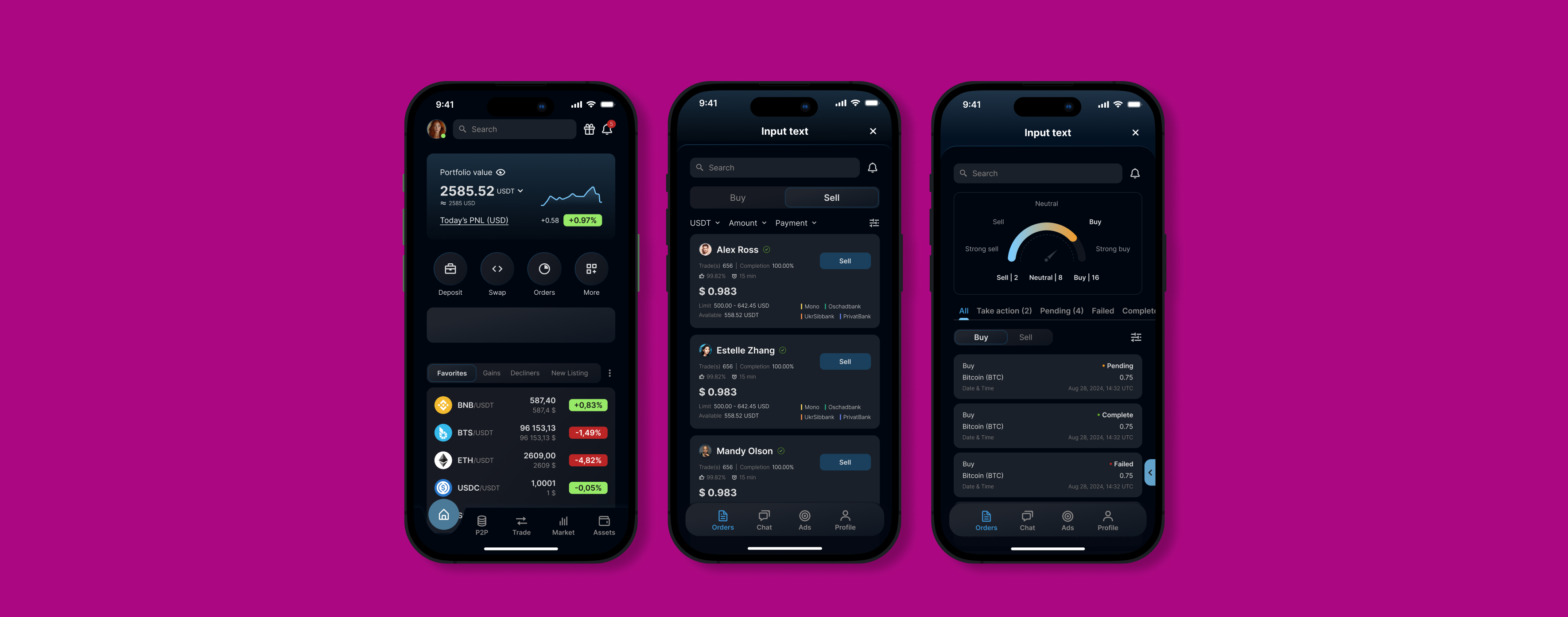
Xchange is a decentralized trading platform that allows users to buy and sell cryptocurrencies directly with one another - no middlemen. Designed with privacy, trust, and simplicity in mind, the app features an escrow system for secure transactions, a reputation system for credibility, and multiple payment methods for flexibility.
Our goal was to create a user-friendly and trustworthy environment that supports both new and experienced crypto users by reducing complexity, lowering fees, and increasing transparency.
Scope of Work
The platform was created to make peer-to-peer crypto trading more accessible, especially for users frustrated by overly technical interfaces and complex processes. While many existing platforms target experienced traders, our goal was to design a secure and intuitive app that anyone could use with confidence.
- The focus was on simplifying the trade experience while maintaining essential security and privacy features like escrow and user ratings.
- We applied UX research methods to define core user needs, structure the app flow, and design clean, user-friendly mobile screens.
- The result is a functional prototype that supports direct crypto transactions with multiple payment options in a decentralized environment.
Challenge
Crypto exchanges are often overloaded with complex interfaces and technical steps, making it difficult for everyday users to trade confidently and securely.
How might we simplify the peer-to-peer exchange process by providing users with a clear interface, helpful guidance, and flexible payment options - while maintaining privacy and trust?
Research
Goal of Research
To understand what makes crypto trading platforms feel overwhelming, untrustworthy, or inaccessible—and identify key opportunities to create a simpler, safer, and more user-friendly P2P trading experience.
Methods
User Surveys
Collected insights on users’ experiences, frustrations, and expectations when trading crypto.
Personas
Developed three detailed personas based on survey data to represent real user needs and guide our design choices.
Competitor Audit
Analyzed platforms like Binance, OKX, and Coinbase to identify usability gaps and best practices.
User Stories
Mapped out goals, pain points, and motivations to inform core app flows.
Information Architecture
Organized screens and features to support intuitive navigation and task completion.
Persona
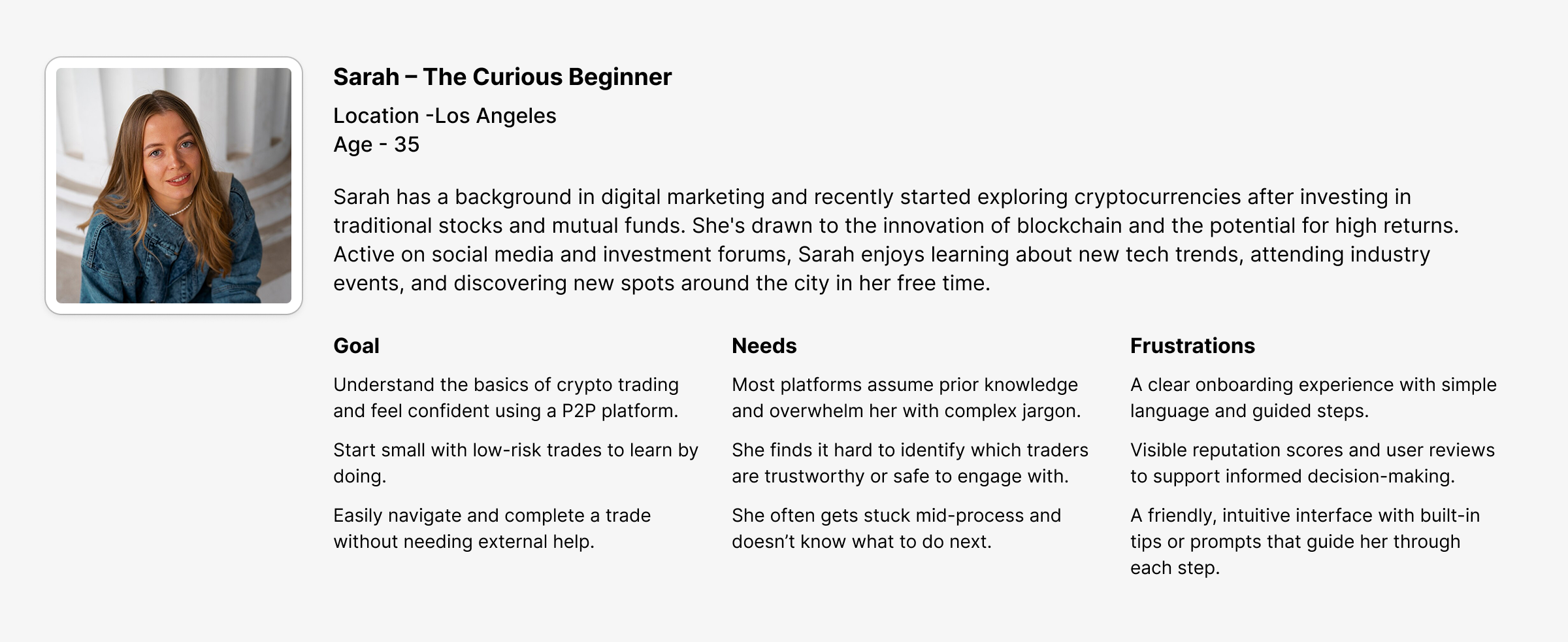
Based on insights collected through user surveys, we created three personas that reflect the different goals, behaviors, and frustrations of people using peer-to-peer crypto platforms. Here we focused on highlighting our primary persona, who best represents the core user we designed for.
Competitor Audit
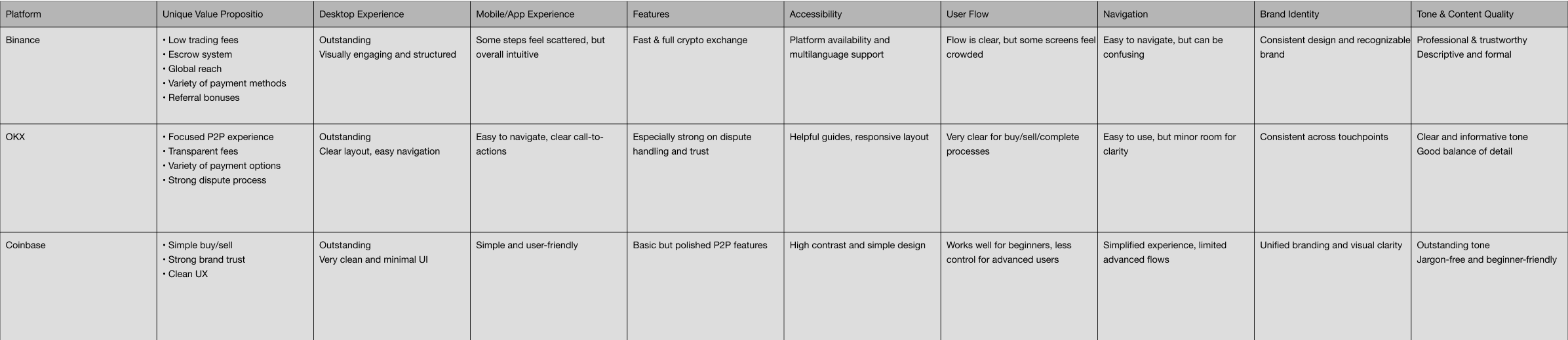
To better understand the P2P crypto space, we analyzed three major platforms: Binance, OKX, and Coinbase. We focused on identifying patterns, strengths, and usability gaps.
Key Insights
Research
Extensive research was conducted, including user interviews, competitive analysis, and heuristic evaluations, to gather insights about user pain points, goals, and behaviors.
Synthesis
Insights were synthesized into clear problem statements, personas, and user journey maps to guide the design process and ensure alignment with user needs.
Design
Ideas were brainstormed and transformed into wireframes and prototypes, focusing on creating intuitive and accessible solutions to identified problems.
Delivery
The prototypes underwent usability testing in multiple rounds to gather feedback and refine the design, ensuring the final product was effective, seamless, and aligned with user expectations.
Information Architecture
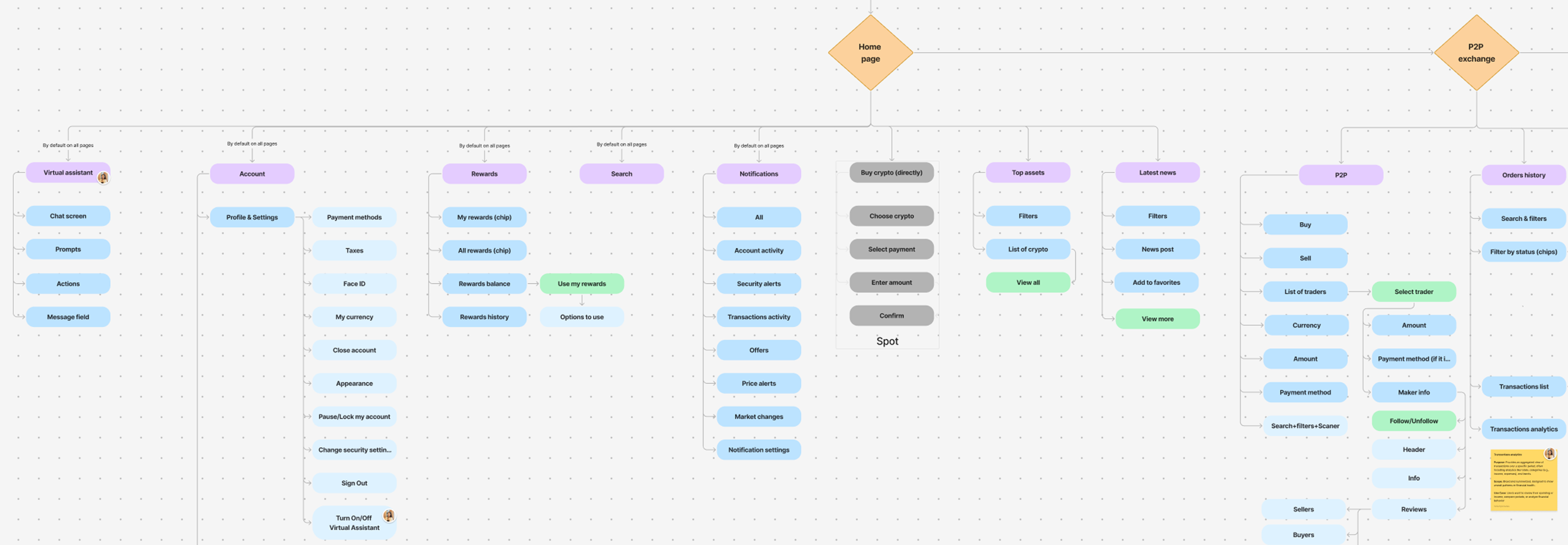
Based on our research insights, user goals, and key tasks, we created a clear and minimal information architecture to support a smooth trading experience. The structure focuses on reducing friction, guiding users through core flows like buying/selling, wallet management, and dispute resolution—while keeping navigation intuitive for both new and experienced traders.
Design
Sketches
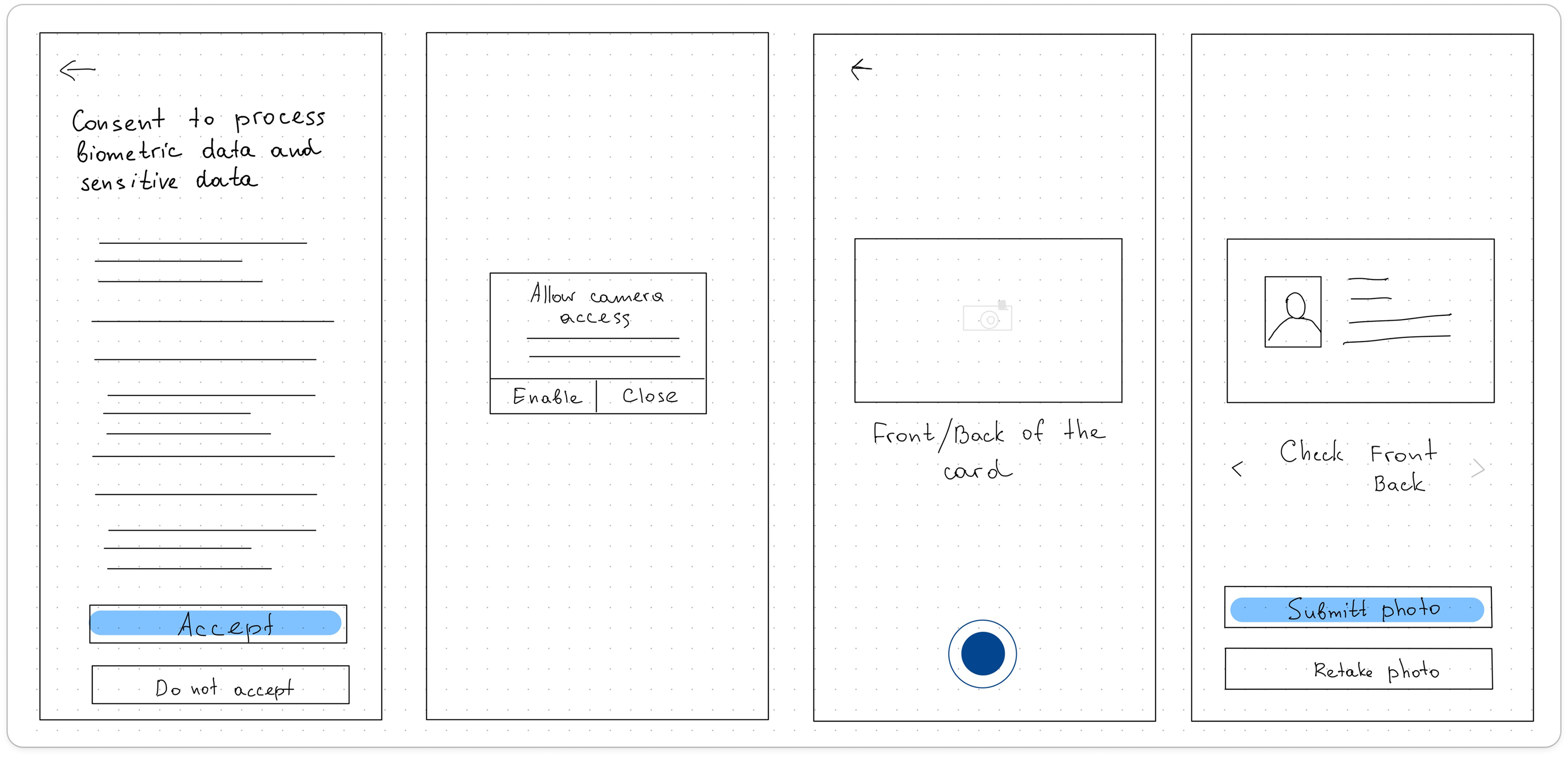
Before jumping into wireframes, we started with quick sketches to explore different layout ideas and user flows. This helped us rapidly test concepts, prioritize features, and align on the overall structure of key screens—like the home screen, trade flow, and payment selection—before moving into Figma. Sketching allowed us to focus on usability and functionality early on, without getting distracted by visual design details.
Mid-fidelity Screens
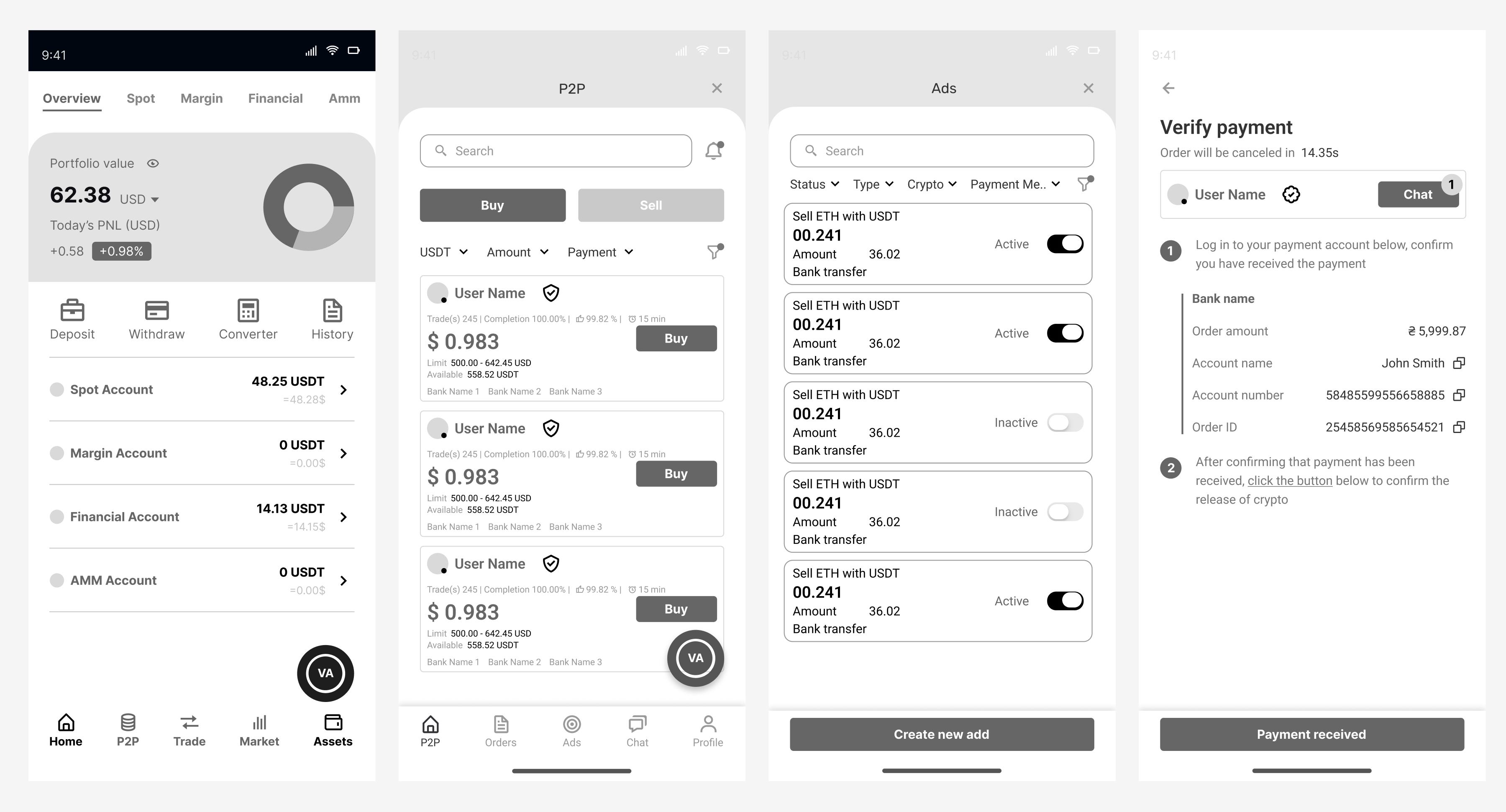
After aligning on key flows through sketches, we moved into mid-fidelity wireframes to define structure, layout, and interactions in more detail. This stage focused on usability—clarifying the navigation, refining user journeys like buying/selling crypto, selecting payment methods, and viewing trader reputation.
Working in grayscale allowed us to test functionality and flow without the distraction of visuals, and set a strong foundation for high-fidelity design.
Hi-fidelity Screens
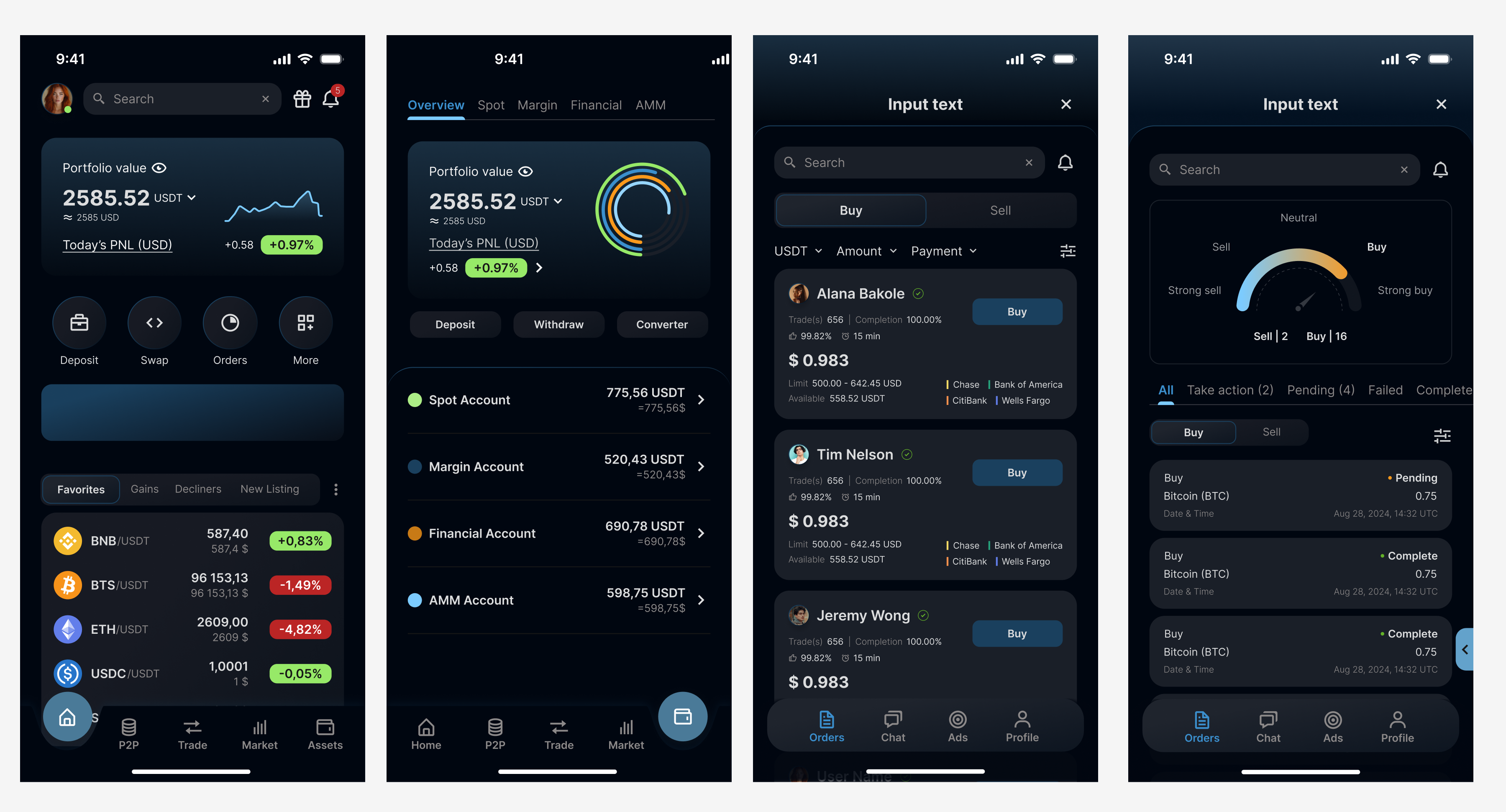
With the core structure in place, we moved into high-fidelity design to bring the product to life. We focused on creating a clean, modern interface that communicates trust, clarity, and ease of use—especially for users new to crypto.
We introduced clear CTAs, and a consistent design language across all screens. The mobile-first layout ensures a seamless experience for users trading on the go.
Olha ‘Ola’ Lytovchenko
Home
About
Contact
Research / Design
Xchange
Decentralized P2P trading platform designed to simplify buying and selling crypto with secure payments, ratings, and real user control
Project Overview
Xchange is a decentralized trading platform that allows users to buy and sell cryptocurrencies directly with one another - no middlemen. Designed with privacy, trust, and simplicity in mind, the app features an escrow system for secure transactions, a reputation system for credibility, and multiple payment methods for flexibility.
Our goal was to create a user-friendly and trustworthy environment that supports both new and experienced crypto users by reducing complexity, lowering fees, and increasing transparency.
Scope of Work
The platform was created to make peer-to-peer crypto trading more accessible, especially for users frustrated by overly technical interfaces and complex processes. While many existing platforms target experienced traders, our goal was to design a secure and intuitive app that anyone could use with confidence.
- The focus was on simplifying the trade experience while maintaining essential security and privacy features like escrow and user ratings.
- We applied UX research methods to define core user needs, structure the app flow, and design clean, user-friendly mobile screens.
- The result is a functional prototype that supports direct crypto transactions with multiple payment options in a decentralized environment.
Challenge
Crypto exchanges are often overloaded with complex interfaces and technical steps, making it difficult for everyday users to trade confidently and securely.
How might we simplify the peer-to-peer exchange process by providing users with a clear interface, helpful guidance, and flexible payment options - while maintaining privacy and trust?
Research
Goal of Research
To understand what makes crypto trading platforms feel overwhelming, untrustworthy, or inaccessible—and identify key opportunities to create a simpler, safer, and more user-friendly P2P trading experience.
Methods
User Surveys
Collected insights on users’ experiences, frustrations, and expectations when trading crypto.
Personas
Developed three detailed personas based on survey data to represent real user needs and guide our design choices.
Competitor Audit
Analyzed platforms like Binance, OKX, and Coinbase to identify usability gaps and best practices.
User Stories
Mapped out goals, pain points, and motivations to inform core app flows.
Information Architecture
Organized screens and features to support intuitive navigation and task completion.
Persona
Based on insights collected through user surveys, we created three personas that reflect the different goals, behaviors, and frustrations of people using peer-to-peer crypto platforms. Here we focused on highlighting our primary persona, who best represents the core user we designed for.
Competitor Audit
To better understand the P2P crypto space, we analyzed three major platforms: Binance, OKX, and Coinbase. We focused on identifying patterns, strengths, and usability gaps.
Key Insights
Overwhelming Interfaces
Most crypto apps are cluttered and overly complex, especially for beginners.
Missing Guidance
Limited onboarding and unclear flows lead to confusion and drop-off.
Low Trust
Lack of visible reputation or dispute resolution creates hesitation.
Payment Limitations
Users want more flexible and localized payment options.
Information Architecture
Based on our research insights, user goals, and key tasks, we created a clear and minimal information architecture to support a smooth trading experience. The structure focuses on reducing friction, guiding users through core flows like buying/selling, wallet management, and dispute resolution—while keeping navigation intuitive for both new and experienced traders.
Design
Sketches
Before jumping into wireframes, we started with quick sketches to explore different layout ideas and user flows. This helped us rapidly test concepts, prioritize features, and align on the overall structure of key screens—like the home screen, trade flow, and payment selection—before moving into Figma. Sketching allowed us to focus on usability and functionality early on, without getting distracted by visual design details.
Mid-fidelity Screens
After aligning on key flows through sketches, we moved into mid-fidelity wireframes to define structure, layout, and interactions in more detail. This stage focused on usability—clarifying the navigation, refining user journeys like buying/selling crypto, selecting payment methods, and viewing trader reputation.
Working in grayscale allowed us to test functionality and flow without the distraction of visuals, and set a strong foundation for high-fidelity design.
Hi-fidelity Screens
With the core structure in place, we moved into high-fidelity design to bring the product to life. We focused on creating a clean, modern interface that communicates trust, clarity, and ease of use—especially for users new to crypto.
We introduced clear CTAs, and a consistent design language across all screens. The mobile-first layout ensures a seamless experience for users trading on the go.